PHOTO DESK · PUBLIC LIFE
Reading Canadian public images without inventing the event
Flags, crowds and familiar architecture can create an immediate sense of place. Responsible captions still need a source, date, location and a clear account of what remains unknown.
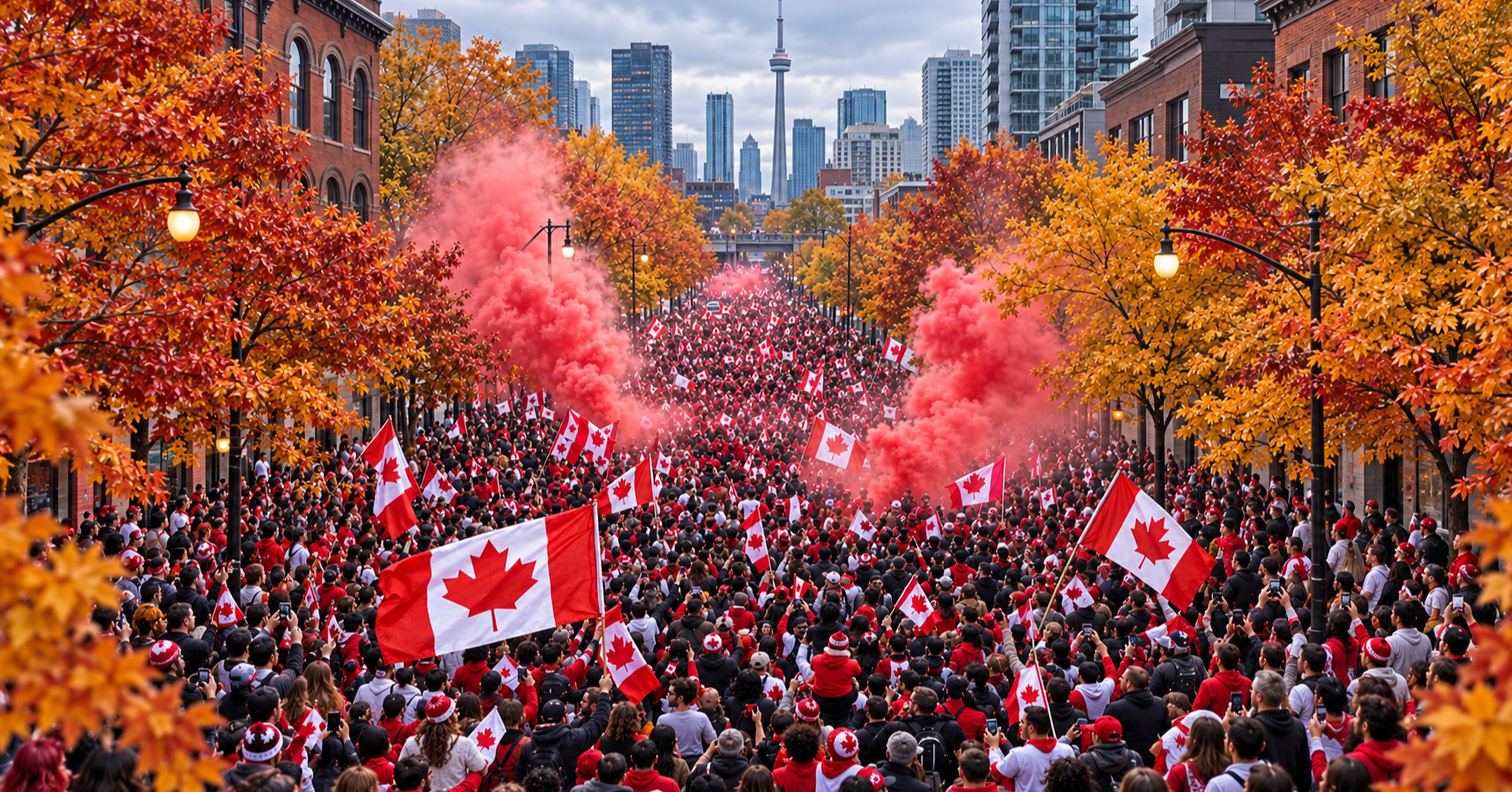
This publication’s regional perspective shapes the questions we ask, while the verification method remains useful across Canada.
01
Describe before interpreting
Start with visible details: flags, a large crowd, autumn foliage, smoke-like colour and an urban skyline. Those observations are different from naming an event, estimating attendance or assigning a political purpose. A caption should not convert a visual impression into a factual claim. Description first gives editors a neutral base for later verification.
02
Look for the earliest available file
Reposts often crop an image and remove metadata or surrounding text. Search for the earliest publication you can document and compare the full frame. Note whether the source identifies a photographer, organization, city or occasion. Matching landmarks can suggest a location, but a confident caption should explain the basis for that identification rather than presenting recognition as proof.
03
Test the date from several clues
Trees, clothing, shadows and signage can narrow a season, but they rarely provide an exact day. An upload date is not necessarily a capture date. Reliable dating may combine the original file, an event schedule, weather records, other photographs and statements from organizers. If those pieces are unavailable, use language such as “undated supplied image” rather than guessing.
04
Crowd size requires a method
Perspective can make a gathering look denser or larger. A defensible estimate uses a mapped area, a stated density range and uncertainty. It should also distinguish participants from passersby. Without that method, terms such as “record crowd” or “the whole city” are rhetoric, not measurement. The image can remain powerful without an unsupported number.
05
National symbols do not settle purpose
Canadian flags appear at celebrations, sporting events, ceremonies, demonstrations and commercial promotions. Colour and symbolism do not identify the organizer or the message. Read placards where legible, check the host’s published programme and seek independent reporting. Avoid assigning motives to every person visible in a crowd.
06
Our conclusion
The supplied crowd and celebration images are presented as visual material, not as proof of a named 2026 event. The editorial task is to preserve that distinction. Readers should be able to tell what the image shows, how its origin was checked and which facts remain unresolved.